Waakye (Rice and Beans)
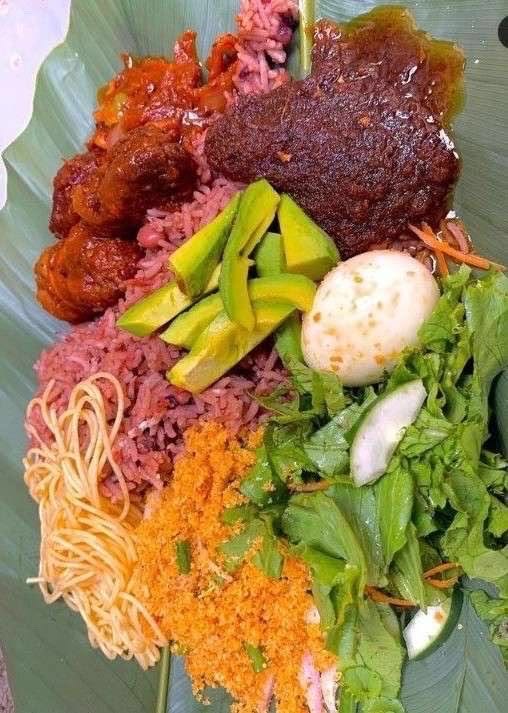
Ghana's beloved breakfast and lunch dish - rice and black-eyed peas cooked together with dried sorghum (millet) leaves that give it the signature reddish-brown color and earthy flavor. Served with an elaborate array of accompaniments.
Waakye (pronounced "waa-chay") is rice and beans cooked together in one pot, and its signature is colour: a deep reddish-brown that comes from dried sorghum (millet) leaves, known locally as waakye leaves. The leaves are simmered with the beans and release a natural pigment — this is what separates real waakye from ordinary rice and beans. Where the leaves are hard to find, a small piece of food-grade limestone (kanwa) or a pinch of baking soda is sometimes used to deepen the colour and soften the beans.
Rodney's been buying waakye from the same junction since he was a teenager — the seller wraps it in a broad banana leaf that leaves a faint earthy smell on the rice that no styrofoam container can replicate. He says the queue is half the experience: good waakye joints always have a line, and there's a running joke that if the seller calls you up from the back to serve you first, you've genuinely made it. That happened to Rodney once, and he still brings it up.
Cook the beans first, then the rice
The beans — usually black-eyed peas or cowpeas — need a head start because they take longer than rice. They are boiled with the waakye leaves until almost tender, and only then is the rice added to finish cooking in the same coloured, seasoned water. Adding the rice too early gives undercooked beans or overcooked, broken rice.
Waakye is rarely eaten plain. The full street-food plate is built around it: shito (black pepper sauce), gari or talia (spaghetti), boiled egg, fried fish or meat, and a sharp tomato-and-pepper salad. That combination of textures is the whole point of the dish.
Waakye (Rice and Beans)
Ingredients
- 2 cups (475 ml) long-grain rice (jasmine or basmati)
- 1 cup (235 ml) dried black-eyed peas
- 1 large handful dried waakye leaves (sorghum/millet leaves)
- ½ tsp (2 ml) baking soda (optional, helps with color and softens beans)
- 6-8 cups water
- Salt to taste
- Traditional Accompaniments:
- Shito (hot pepper sauce)
- Cooked spaghetti tossed with stew (talia)
- Fried or stewed fish
- Boiled eggs
- Fried ripe plantains
- Gari (dampened cassava granules)
- Wele (cooked cowhide) - optional
- Fresh pepper and onion salad
- Avocado slices
Instructions
- Soak black-eyed peas in water overnight or for at least 6-8 hours. This significantly reduces cooking time and helps them cook evenly.
- Drain and rinse the soaked beans thoroughly.
- Rinse the dried waakye leaves to remove any dust. You can break them into smaller pieces.
- In a large pot, bring 6 cups of water to a boil. Add the waakye leaves and boil for 15 minutes until the water turns a deep wine/purple color.
- Add the soaked black-eyed peas and baking soda (if using). Boil for 25-30 minutes until beans are almost tender but still slightly firm.
- While beans cook, rinse rice thoroughly until water runs clear.
- Add the rice to the pot with the beans. Stir gently and add more water if needed - water should just cover the rice.
- Add salt to taste. Cover tightly and reduce heat to low.
- Cook for 20-25 minutes without stirring until rice is tender and all water is absorbed.
- Remove waakye leaves before serving. The rice and beans should have a uniform reddish-brown color.
- Let rest for 5 minutes, then fluff gently.
- Serve in portions with your choice of accompaniments: shito, talia (spaghetti), fried fish, boiled eggs, fried plantains, gari, and salad.
Tips & variations
- Soaking the beans for a few hours shortens the cooking time and helps them cook evenly.
- Add the rice only once the beans are nearly tender, so both finish together.
- The waakye leaves are essential for authentic flavor and color - they're not optional. If unavailable, 1/2 tsp baking soda will give some color but not the same flavor. Soak beans overnight for the best texture. Don't stir during the final cooking stage to prevent mushy rice. In Ghana, waakye is traditionally wrapped in banana leaves for serving, which adds a subtle flavor.
- Dried black-eyed peas (cowpeas)
- Shito (black pepper sauce)
- Gari (cassava flakes)
By region:
- UK & EU: African, Caribbean & Asian grocers — in store or online
- Australia: African/Asian grocers and larger supermarkets
- US & Canada: African grocers or online retailers
Some shopping links may be affiliate links; we may earn a small commission at no extra cost to you.
Key ingredients
Frequently asked questions
What gives waakye its red-brown colour?
Dried sorghum (millet) stalks, known as waakye leaves, simmered with the beans. They release a natural reddish-brown pigment. A small amount of food-grade limestone (kanwa) is sometimes added to deepen the colour and soften the beans.
What beans are used for waakye?
Black-eyed peas (cowpeas) are the traditional choice. They hold their shape during the long cook and pair well with the rice.
What is served with waakye?
A classic waakye plate includes shito (black pepper sauce), gari or talia (spaghetti), boiled egg, fried fish or meat, and a fresh tomato-pepper salad. The mix of textures is central to the dish.
Can I make waakye without waakye leaves?
Yes. The flavour will still be good, but the colour will be paler. Some cooks use a tiny pinch of baking soda to mimic the deeper colour and help the beans soften, though it should be used sparingly.
Why are my beans still hard?
Beans need to be boiled until almost tender before the rice goes in. Old, long-stored beans take longer, and very hard water can slow softening — give them more time rather than adding the rice early.