Masa (Waina) Rice Cakes
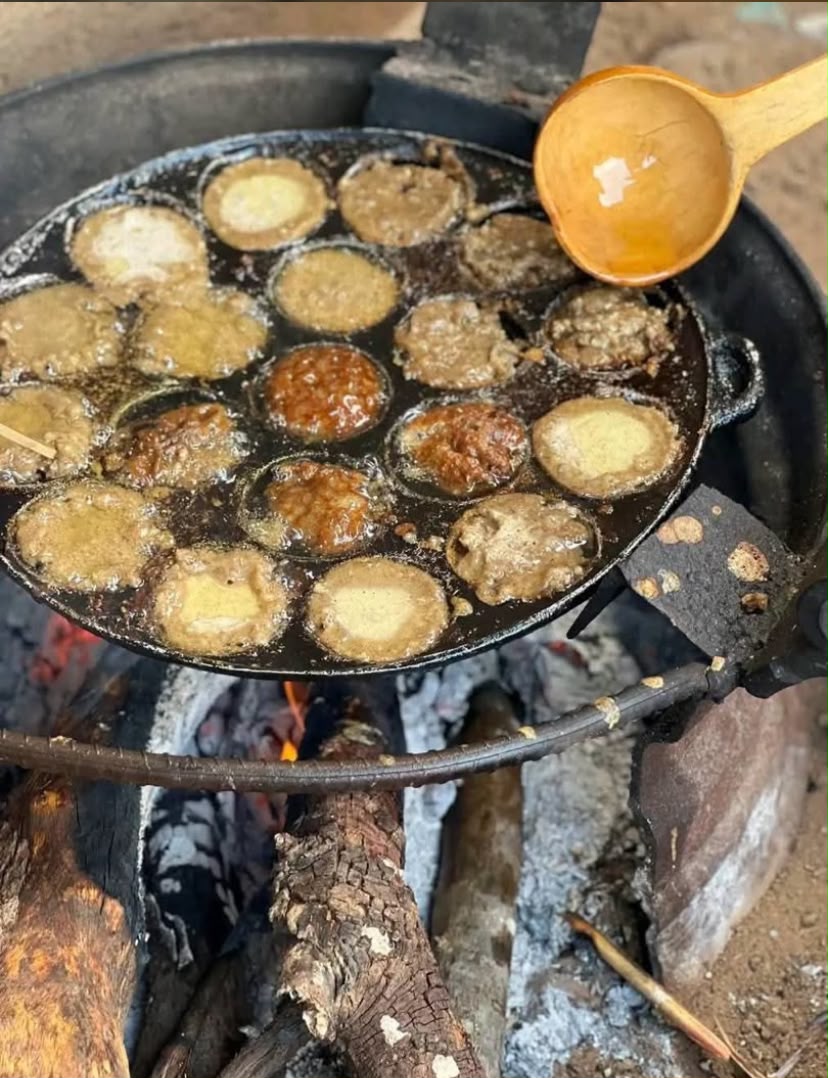
Masa, also called waina, is a soft, spongy fermented rice cake associated with Hausa cooking in northern Nigeria and also eaten in Ghana. The batter is made from soaked rice and cooked rice, left to rise, then fried in a multi-cup masa pan until golden outside and airy inside.
Serve it warm as a breakfast or street snack, with porridge, honey, yaji or miyan taushe. This page describes the Hausa-style rice version; grain choices and methods vary across West Africa.
Allow 8–12 hours for soaking and 6–8 hours for fermentation, in addition to about 20 minutes of active preparation and 20 minutes of cooking. Fermentation varies with temperature: look for a bubbly, risen batter rather than relying on the clock alone. The estimated total is 14 hours 40 minutes to 20 hours 40 minutes, and the estimated yield is six servings. This owner-supplied recipe has been reviewed against published references, not kitchen-tested by GhanaianFood.com.
This recipe is Day 25 of 30 Dishes to Detty December. See the full series.
Masa (Waina) Rice Cakes
The Full Pot newsletter
Get the Diaspora Pantry Starter Kit
19 tested swaps for the Ghanaian ingredients you can't find abroad, plus where to buy them in the US, UK, and Canada. Free.
Join the list and you'll be first to hear when our cookbook drops, with an early bird price.
No spam. Unsubscribe anytime.
Ingredients
- 3 cups non-parboiled tuwo rice or another suitable white rice, uncooked
- ½ cup cooked rice, cooled safely and refrigerated until needed
- 1 tsp dry yeast
- 1½ tbsp sugar (adjust to taste — sweet versions use more)
- ½ tsp salt
- Water, as needed for soaking and blending
- Vegetable oil for greasing the pan
Method
- Rinse the uncooked rice and soak it in plenty of water for 8–12 hours, or overnight.
- Drain the rice. Blend the soaked rice with the cooked rice and a little water until very smooth, adding water gradually to make a pourable batter.
- Stir in the yeast, sugar and salt. Cover with a clean cloth and leave to ferment for 6–8 hours, until bubbly and risen. Timing varies with temperature; check the batter as it rises rather than extending fermentation solely to meet a time.
- Heat the masa pan over medium heat and grease each cup lightly with oil.
- Pour batter into the cups, filling each about two-thirds full.
- Cook 3–4 minutes until bubbles form and the bottom is golden, then flip and cook 3–4 minutes more, until the centre is set and cooked through. Adjust the heat if the outside browns before the centre cooks.
- Remove and repeat with the remaining batter. Serve warm. Cooking the full batch may take longer depending on the size of the pan.
Tips
Batter and pan
The batter should be runny, not thick — thin enough to pour, thick enough to hold its shape in the cup. Add blending water gradually rather than flooding the rice.
Keep the pan over medium heat. Too much heat browns the outside before the centre is cooked. A multi-cup masa pan gives the characteristic round shape; an aebleskiver pan is another option.
No masa pan? Cook the batter as a flat rice pancake in a regular pan. This related preparation is commonly called sinasir, and its cooking method differs from the round cakes.
Variations and serving
Sweet or savoury: sugar is to taste across households. Other versions use millet, corn, onion or spices, but those are variations rather than extra ingredients required for this rice batch.
Serve masa warm as a snack or breakfast: with miyan taushe (pumpkin and groundnut stew), with sugar, honey or yaji, with kunu or tea. In Ghana, masa is also eaten with porridge.
Masa and waina are both names used for these rice cakes. Similar names and spellings are used for other grain cakes across West Africa; do not assume every maasa or masa recipe has the same ingredients.
Storage and reheating
Refrigerate cooked cakes promptly, within 2 hours of cooking, or within 1 hour if the temperature is above 90°F (32°C). Keep them covered in the refrigerator at 40°F (4°C) or below for up to 3 days, or freeze them. Reheat leftovers to 165°F (74°C). These are general leftover-handling guidelines, not a measured shelf-life test of this recipe.
Keep cooked rice refrigerated until you are ready to blend it. Do not use cooked rice that has been left out overnight.
Recipe and naming references: Eat with Afia, Pulse Nigeria and African Food Network. Methods and fermentation times differ between these sources. Storage guidance: USDA leftovers and food safety.
Key ingredients
Frequently asked questions
What is the difference between masa and waina?
Both names are used for Hausa-style rice cakes. Usage varies between communities; this page does not claim that one is the original name.
Do I need a masa pan?
A multi-cup masa pan gives the classic rounded shape. An aebleskiver pan is an alternative. A regular frying pan makes a flatter rice pancake, a related preparation commonly called sinasir.
Which rice should I use?
Use non-parboiled tuwo rice or another suitable white rice. Published recipes differ on the best variety, so rice type can affect texture.
Is masa supposed to taste sour?
A gentle tang is characteristic of fermented masa. The degree of sourness depends on the recipe, time and temperature; a more acidic batter is not necessarily a sign that extra yeast was used. Discard any batch with mould or other signs of spoilage rather than trying to rescue it.
How long does masa take?
For this version, allow 8–12 hours soaking and 6–8 hours fermentation, plus about 20 minutes active preparation and 20 minutes cooking. That is about 14 hours 40 minutes to 20 hours 40 minutes overall; a smaller pan can increase the cooking time.
What do I eat masa with?
Miyan taushe, honey, yaji, kunu, tea or porridge.
More recipes to try
- Tatale Recipe: Ghanaian Ripe Plantain Pancakes
- Kosua ne Meko: Ghanaian Boiled Eggs with Pepper Sauce
- Ghanaian Meat Pie Recipe: Flaky Party Pies with Spiced Minced Beef
- Suya Recipe: Ghanaian Yaji-Spiced Grilled Meat Skewers
- Achomo (Ghana Chips) — Crispy Festive Snack
- Ghanaian Spring Rolls & Samosas (Crispy Party Snacks)